
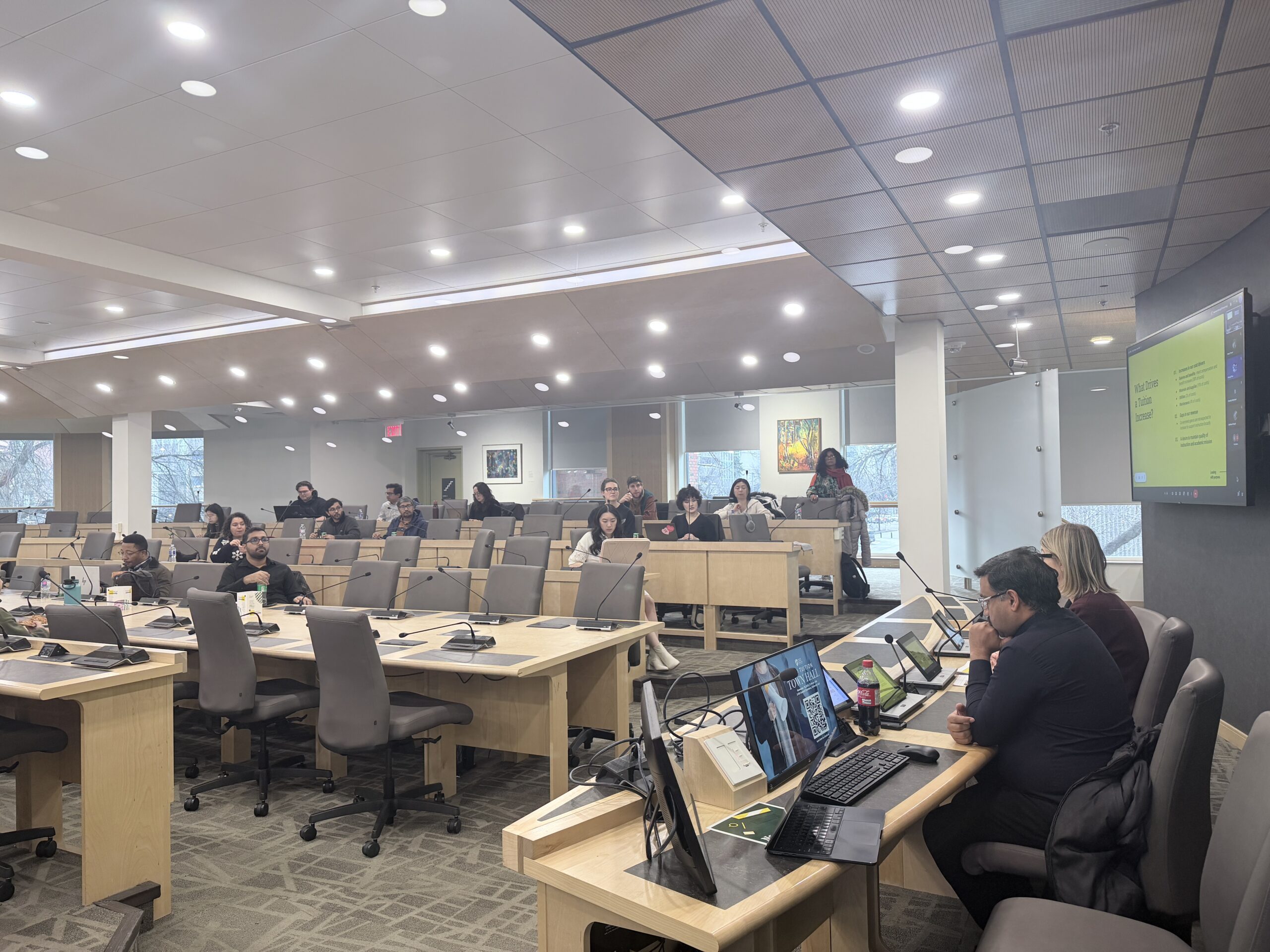
Missed the GSA Tuition Town Hall on November 19? Here’s a quick breakdown of the tuition changes being considered by the University of Alberta, the questions graduate students raised, and how you can share your feedback before the next round of discussions.
The Town Hall brought together graduate students and university representatives, including Melissa Padfield, Deputy Provost (Students and Enrolment), to discuss proposed tuition changes for the 2027–28 and 2028–29 academic years.
First, a Quick Note: Nothing Is Final Yet
The tuition changes below are proposals, not final or approved tuition rates. They are being presented as part of the university’s ongoing consultation process and may change following student feedback, further regulatory information, and the university’s approval processes.
Some previously approved changes are also mentioned below and are clearly identified as such.
What’s Being Proposed?
Here’s a quick look at the main tuition proposals discussed during the Town Hall.
| Student group | Proposed change | When? |
| Domestic students | 2% tuition increase | Fall 2027 |
| Incoming international course-based master’s students | 4% tuition increase | Fall 2028 |
| International thesis-based graduate students | Tuition proposal under discussion; no changes confirmed. | Fall 2028 |
| New out-of-province domestic students in the online MEng in Construction Engineering | Tuition of approximately $27,000 | Fall 2027 |
What else should you know?
Domestic financial assistance: The university is proposing to change its domestic need-based financial assistance allocation from a fixed $8.5 million to 3.25% of total tuition revenue. Based on the figures presented, this could provide approximately $324,000 more in need-based assistance if tuition rates and enrolment remained unchanged.
International tuition guarantees: International students receive a guaranteed total program tuition amount when admitted. The proposed 4% increase would apply to incoming Fall 2028 international course-based master’s students, not students already enrolled under an existing tuition guarantee. The proposal also covers incoming international undergraduate students.
International thesis-based tuition: A 5.5% reduction has already been approved for Fall 2027. A working group involving university and GSA representatives is currently reviewing international thesis-based graduate tuition for Fall 2028. No specific changes have been proposed or finalized at this stage.
Mandatory non-instructional fees: A separate 3.93% increase for 2027 has already been approved through the applicable committee process. This is not one of the tuition proposals currently under consultation.
The proposed online MEng tuition rate is also expected to go through an earlier approval process in December 2026.
Why Are These Changes Being Considered?
Tuition is reviewed as part of the university’s annual financial planning and consultation process.
During the Town Hall, university representatives discussed operating costs, academic program delivery, student financial support, and maintaining existing services as considerations in developing the proposals.
They also noted that potential changes to provincial tuition regulations, including those associated with Bill 38, could affect future tuition planning. Further details were not yet available at the time of the Town Hall.
What Did Graduate Students Ask?
Students raised several practical questions about how tuition and funding affect their finances and graduate experience.
1. Why doesn’t my funding offer reflect what I actually take home?
Students raised concerns about funding letters that show total amounts without clearly explaining tuition deductions and other costs. The university acknowledged the issue and said work is underway to improve how funding information is communicated.
2. Why are my tuition calculators and offer letters showing different amounts?
Students asked for clearer and more consistent information about tuition costs, payment schedules, and what they should expect to pay throughout their programs.
3. Will higher tuition mean better services or education?
The university explained that the proposed 2% domestic increase is intended to help maintain existing programs and services rather than introduce additional improvements.
4. Can students get more flexible tuition payment options?
Students asked about paying tuition upfront at a discount or locking in a fixed tuition rate. Neither option is currently available, but the university expressed openness to further discussions with the GSA.
5. Do I still have to pay tuition if I finish my thesis early in the term?
The university explained that students who submit their thesis to the repository by the applicable early-term deadline may avoid tuition charges for that term. Check the Faculty of Graduate and Postdoctoral Studies’ deadlines and requirements before making any plans.
Students also asked about mandatory fees for online learners, possible changes to tuition structures under provincial regulations, access to non-repayable financial assistance, and the value of graduate education.
Have Questions? Send Them Before November 30
University representatives are scheduled to attend the GSA Council meeting on Monday, November 30, 2026, for further discussions about the tuition proposals.
Whether you attended the Town Hall or are just learning about the proposals now, you can still share your questions, concerns, or suggestions.
Send your feedback to: Daniel Carleton, GSA Speaker | speaker@gsa-ualberta.ca
Questions submitted ahead of the meeting can be considered for discussion with university representatives. Submission does not guarantee that every question will be raised during Council.
The proposals are still under consultation. This is your opportunity to help inform the conversation before decisions are made.